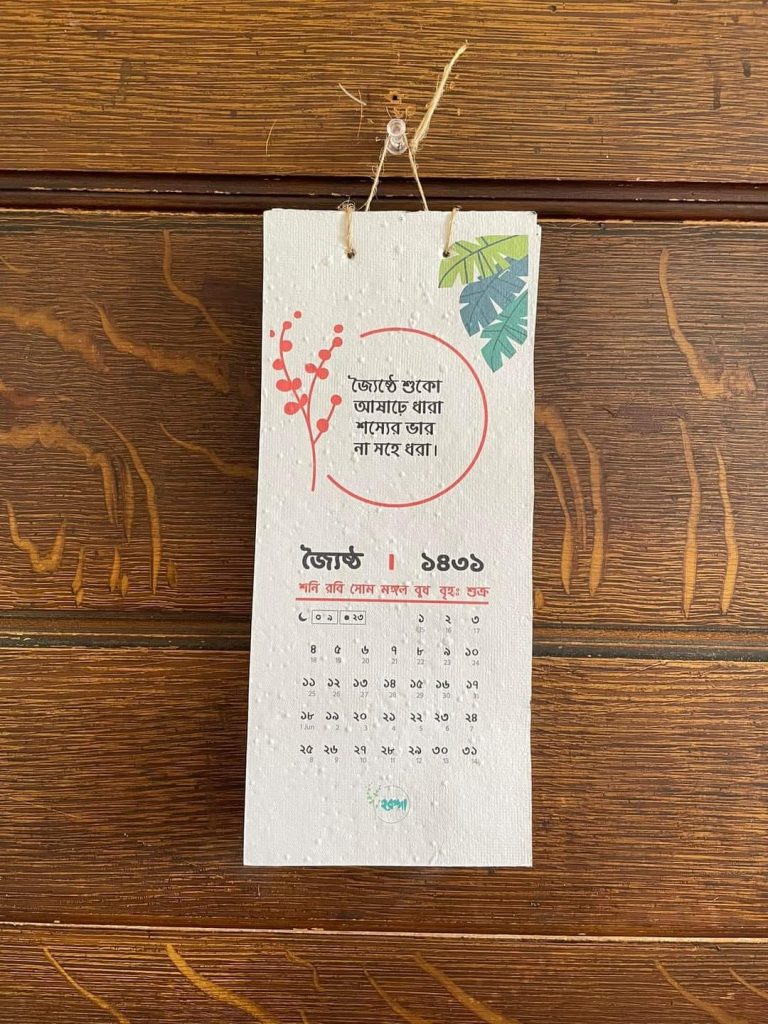

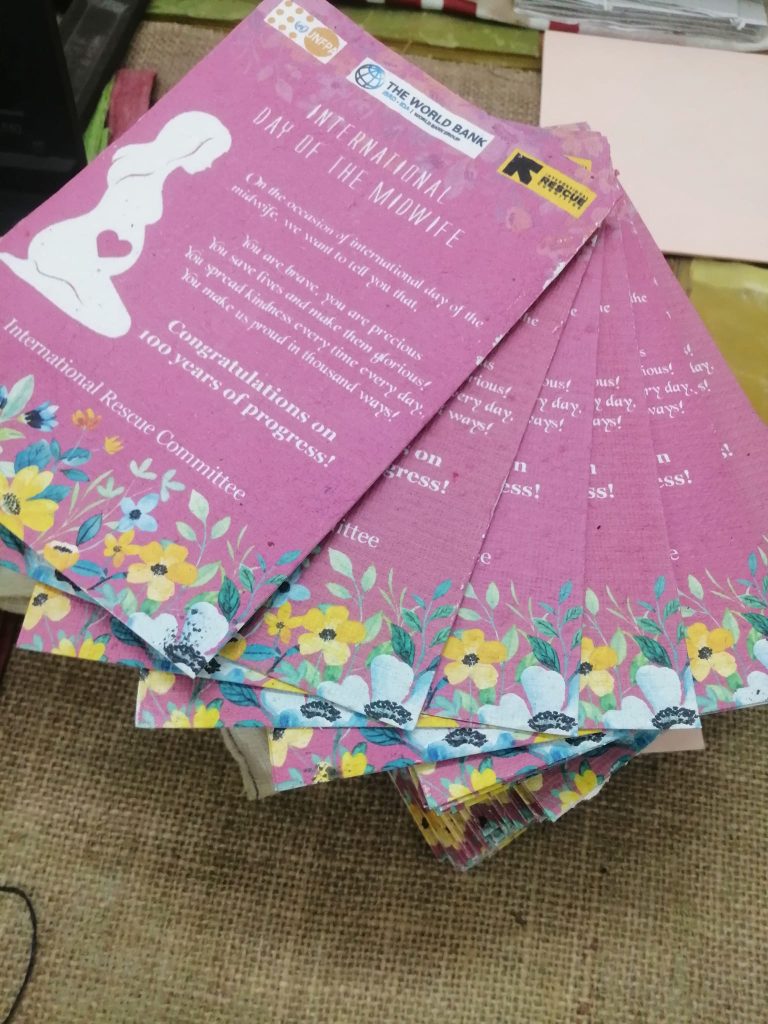
Bonkagoj, our flagship product, is a handmade plantable paper that grows plants when properly planted in ideal soil conditions. The soil must have sufficient microbes and moisture for the paper’s cellulose material to decompose and allow the seeds to germinate. We make Bonkagoj by recycling old papers from kindergarten children’s notebooks and embedding them with native Bangladeshi vegetable seeds such as amaranth, red spinach, tomato, eggplant, pepper, capsicum, and lettuce. Most of the time, we produce 240 GSM paper with a milk-wash color.
Our clients use Bonkagoj for various purposes, including event invitation cards, New Year greeting cards, business cards, product hangtags, price tags, notebook covers, and conference registration cards. In today’s world, where paper is often wasted, such as business cards that are scanned and then discarded Bonkagoj offers a sustainable alternative. Each four kilograms of Bonkagoj saves a mature tree. To date, we have produced over five tons of Bonkagoj, reduced approximately 31 tons of CO2 emission, which uses one-tenth of the water required for conventional paper production, as we recycle water during the process. Since Bonkagoj is handmade, the entire production process is carbon-free.
The word ‘Bonkagoj’ comes from the Bangla words ‘Bon,’ meaning forest of mixed trees and plants, and ‘Kagoj,’ meaning paper. This name signifies an ecology of diverse plants and trees. Unlike conventional seed paper, which uses a single type of seed, Bonkagoj incorporates multiple varieties, promoting permaculture and organic agriculture over monoculture. It represents an inclusive society with less carbon emission, less waste, and a non-toxic daily life. Bonkagoj is not just a product; it tells a story. It sparks conversations about the environment and sustainability. People who learn about Bonkagoj often respond with amazement and start discussing the importance of environmental conservation.
Bonkagoj has created a vast amount of social discussion about the environment and agriculture. It has become a tool for initiating dialogues among individuals and communities and spreading sustainability practices to corporations. Many corporations now use Bonkagoj to showcase their commitment to sustainability, making us their sustainability partners. Despite being less profitable compared to other businesses and challenging to produce due to its handmade nature and high costs for seeds and labor, we continue this work as it is our pride and flagship project under Shalbrikkho, the umbrella organization we run.
We began working on Bonkagoj during the COVID-19 pandemic with zero capital and have since grown into a million-dollar company. Today, we serve approximately 200 domestic customers and over 30 corporate clients, many of whom place repeat orders. While the business may not be the most lucrative, its impact on promoting environmental sustainability, organic agriculture, and a healthier lifestyle is immeasurable. Bonkagoj represents our commitment to fostering an eco-friendly society and encouraging sustainable practices among communities and corporations alike.